
Chicago, Illinois
Roofing, Siding & Gutters on Chicago's Northwest Side.
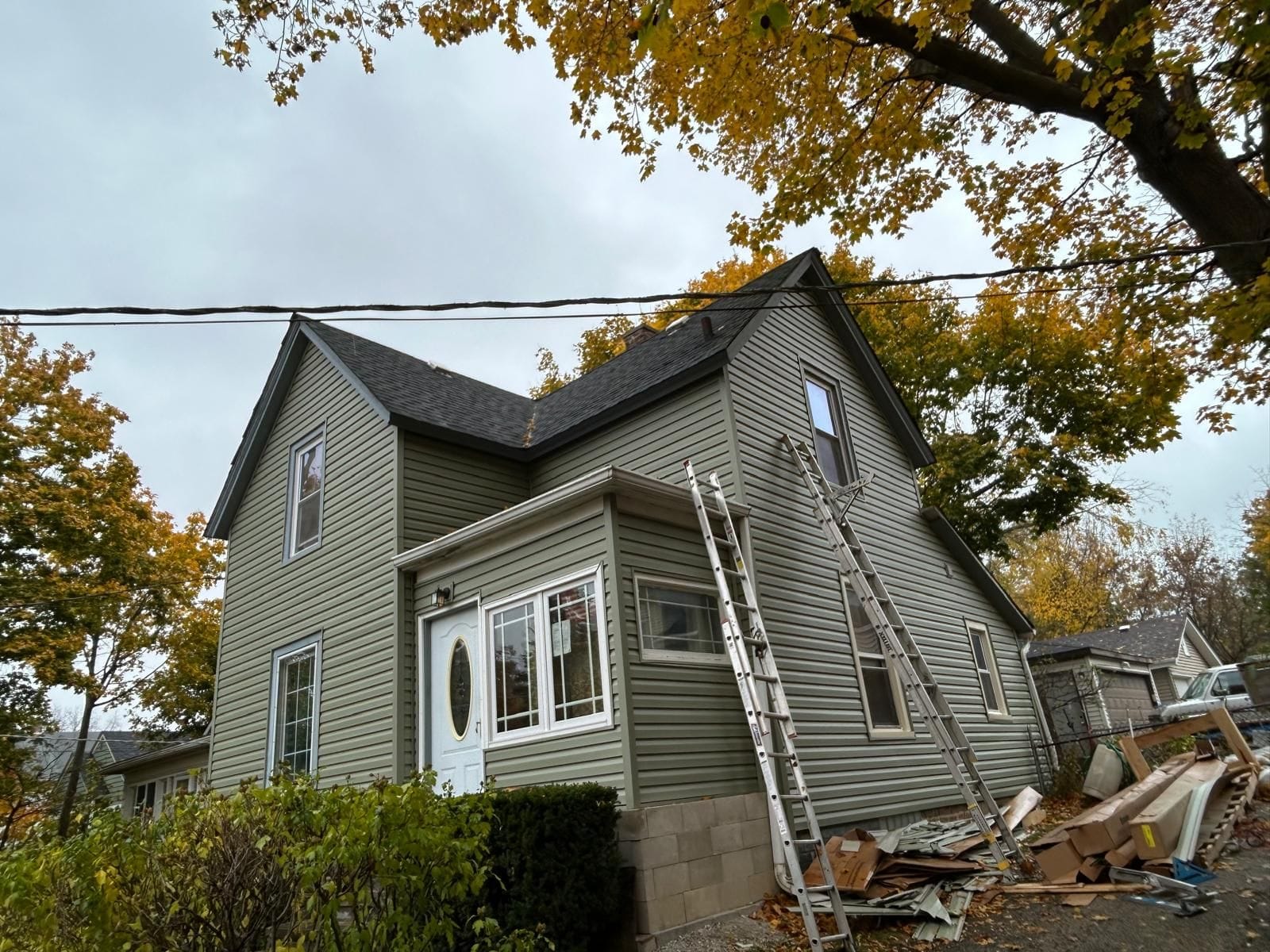
We are based on Chicago's northwest side. The homes around us are mostly brick bungalows, two-flats and older frame houses, many close to a century old.
The homes here
Bungalow belt brick, two-flats and frame houses
Neighborhoods we cover
- Avondale
- Logan Square
- Irving Park
- Old Irving Park
- Portage Park
- Jefferson Park
- Albany Park
- North Center
- Mayfair
- Norwood Park
- Edison Park
Those buildings need different roofs on the same block. A bungalow has a low-pitched shingle roof. A two-flat next door often has a flat roof behind a parapet. We plan each job around the building in front of us, not a standard package.
Much of the northwest side sits in Chicago's bungalow belt. These brick homes went up from about 1910 to the mid-1930s: one and a half stories over a full basement, with a low-pitched hipped roof and wide overhangs. Portage Park has a historic district of them.
Mixed in are brick two-flats and three-flats, many with low-slope roofs, and wood-frame houses with siding. Some of these roofs have been covered over more than once, and a lot of the original sheet metal, flashing and box gutters has been patched for decades.
What we look for
Common issues on Chicago homes.
Low-pitched bungalow roofs
A shallow hipped roof sheds water slowly, so worn shingles and lifted tabs leak sooner than on a steep roof. Wide overhangs also hide rotted fascia and soffit boards until gutters start to pull away.
Flat roofs on two-flats
Low-slope roofs behind parapet walls collect water at drains and scuppers. Failed seams, cracked parapet flashing and ponding are the usual causes of top-floor ceiling stains.
Dormers and add-ons
Many bungalows got attic dormers and rear additions over the years. Every place a newer roof meets the original one is a flashing joint that needs a close look.
Tight gangways and gutters
Houses sit a few feet apart on narrow lots, so downspouts often dump water into a shared gangway. Gutters sized and pitched to move water toward the front or back keep it off foundations and neighbors' walls.
Weather
City storms, mature trees and freeze-thaw
The National Weather Service office for Chicago reports that damaging hail is most common in May and June and damaging winds in June and July. On the northwest side, the bigger wind risk is often the old parkway trees: limbs come down on roofs, gutters and siding during summer storms.
Winter brings repeated freeze-thaw cycles. On a low-pitched bungalow roof, snow that melts and refreezes at the eaves can back water under shingles. Flat roofs see the same cycle at drains and parapet joints, where ice opens small cracks into leaks.
Permits
Chicago Department of Buildings rules for roofs and siding
The City of Chicago Department of Buildings says a building permit is not required for repair, recover or replacement of a roof with a pitch of at least 2:12 on a residential building up to four stories. A permit is required for any structural repair and for any work on a low-slope roof. Most two-flat flat roofs fall in that second group, and reroofing permits can go through the city's Express Permit Program, which requires a licensed Illinois roofing contractor.
Chicago's building code also sets a minimum solar reflectance for new coverings on low-slope roofs, so a replacement flat roof usually means a light, reflective surface. Like-for-like siding replacement on a home up to four stories does not need a building permit, but a dumpster in the street or alley needs a separate permit from the Chicago Department of Transportation. Landmark properties can have different rules. Requirements can change and vary with project scope, so applicable requirements are reviewed before work begins.
Services
Our services in Chicago.
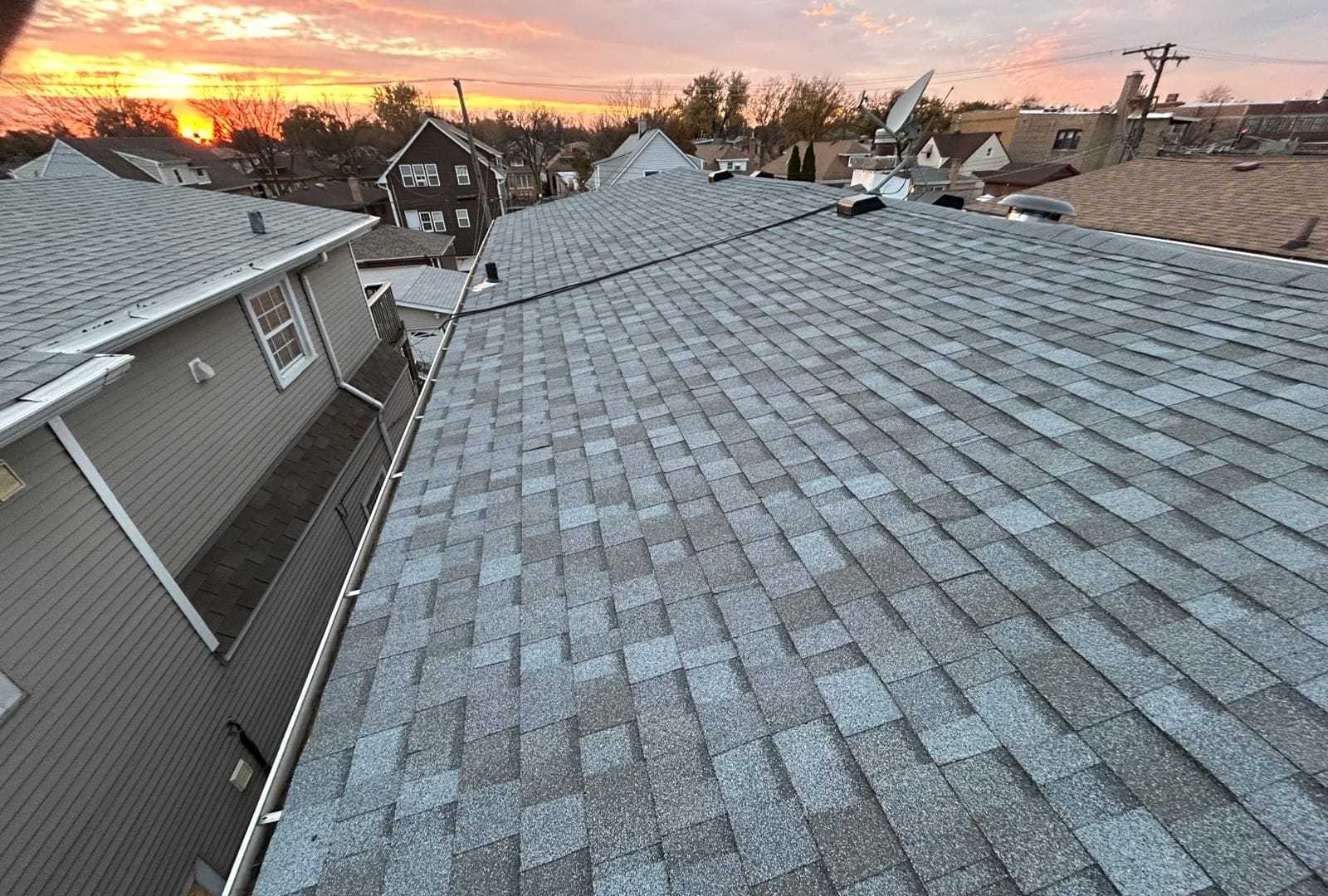
- RoofingWe repair and replace shingle roofs on bungalows and frame houses, and low-slope roofs on two-flats and commercial buildings in TPO, EPDM or torch-down modified bitumen, built to Chicago's code for each roof type.
- SidingOn frame houses and the rear walls of brick buildings, we replace worn siding and the trim, soffit and fascia around it.
- GuttersWe size and pitch seamless gutters for narrow city lots so downspouts move water away from gangways and basements.
- Storm Damage & RestorationAfter a storm drops limbs on a roof or tears siding, we inspect, photograph the damage and write it up so you can decide whether to contact your insurance carrier.
Properties in Chicago
Residential & commercial properties.
Residential
- Single-family homes
- Two-flats
- Multi-unit residential buildings
- Residential additions and renovations
Commercial
- Small commercial buildings
- Retail and office properties
- Mixed-use buildings
- Suitable commercial flat roofing projects
FAQ
Chicago questions
Do I need a permit to replace the roof on my Chicago bungalow?
Usually not. The Department of Buildings does not require a permit to replace a roof with a pitch of at least 2:12 on a residential building up to four stories, as long as there is no structural work. The work still has to meet the Chicago building code. Applicable requirements are reviewed before work begins.
What about the flat roof on my two-flat?
Low-slope roofs need a building permit in Chicago. Reroofing permits can be filed through the city's Express Permit Program. The new covering has to meet the city's reflectance requirement for low-slope roofs, which is why most replacement flat roofs in the city are light-colored.
Which neighborhoods do you cover?
We work across the north and northwest side, including Avondale, Logan Square, Irving Park, Old Irving Park, Portage Park, Jefferson Park, Albany Park, North Center, Mayfair, Norwood Park and Edison Park. If you are close to these areas, call and ask.
Start your project
Let’s Elevate Your Exterior.
Whether it is a new roof, siding, gutters or a repair after a storm, start with an inspection and a written estimate you can read line by line.