

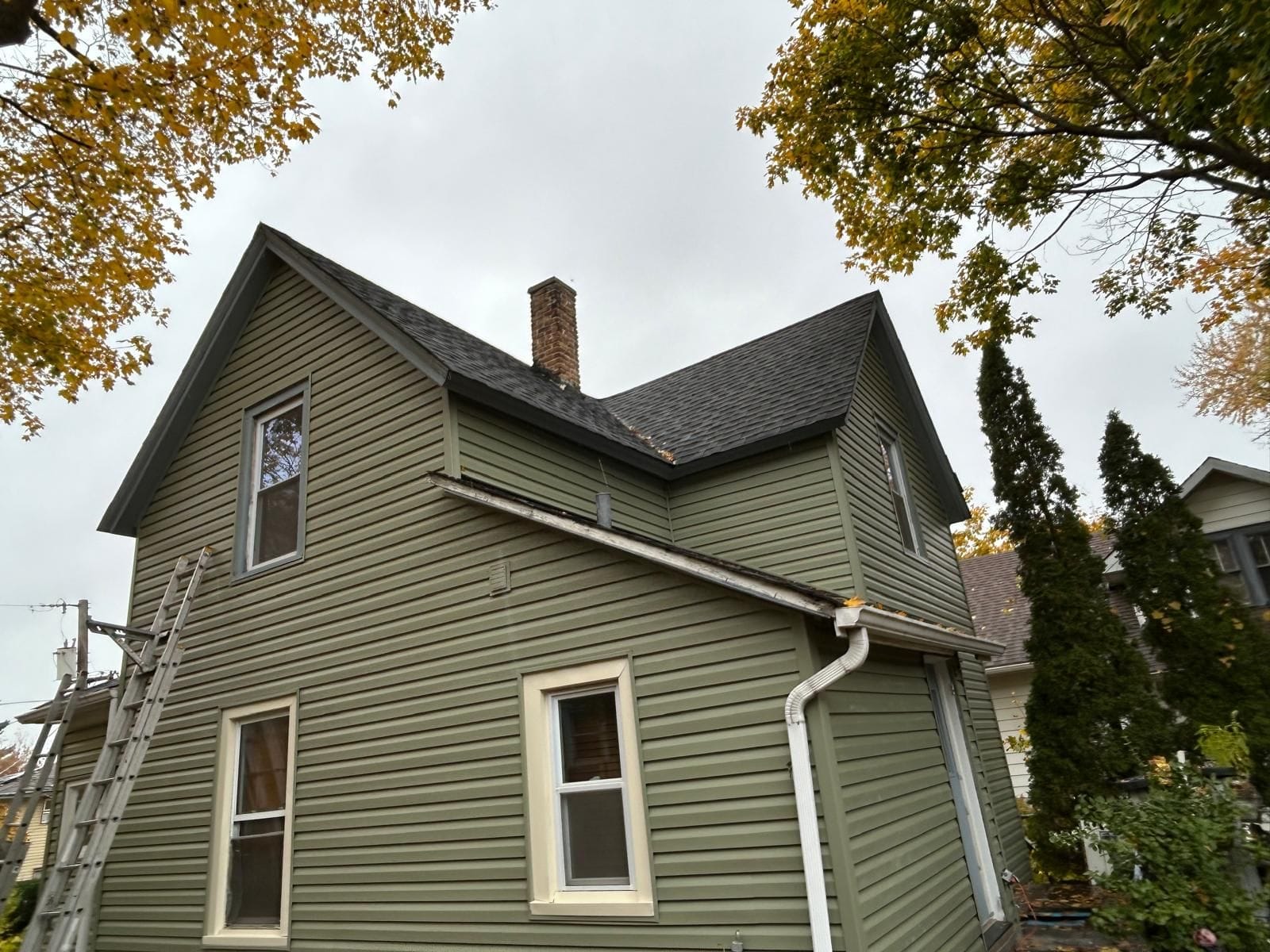
Des Plaines, Illinois
Roofing, Siding & Gutters in Des Plaines, IL.
Most Des Plaines neighborhoods filled in after World War II. Many homes are ranches, raised ranches and split-levels, with older houses closer to downtown.
The homes here
Postwar ranches, split-levels and river neighborhoods
Des Plaines is also a river town. Water management matters here more than in most suburbs, and gutters and downspouts are part of that, even though they cannot stop a river flood.
Ranches and split-levels have long, low rooflines with lots of eave and not much height. That makes them simple to roof, but it also means long gutter runs, wide roof planes that catch wind, and attics that are often under-ventilated.
Many of these homes are now on their second or third roof. Earlier reroofs were sometimes laid over the old shingles, and siding from the 1970s and 1980s is reaching the end of its life on a lot of houses.
What we look for
Common issues on Des Plaines homes.
Layered roofs
Older reroofs were often installed over existing shingles. The City's roofing guide requires tear-off where two or more layers already exist, so we check layer count before quoting.
Weak attic ventilation
Low ranch and split-level attics often have too few vents. Trapped heat shortens shingle life and moisture causes frost and mold on the underside of the deck in winter.
Long gutter runs on low eaves
Long, low eaves need correctly pitched gutters and enough downspouts. Undersized systems overflow in heavy rain and drop water right next to the foundation.
Aging siding on split-levels
Split-levels often mix brick on the lower level with siding above. The joint between them and the trim around it is where water usually gets behind older siding.
Weather
Heavy rain, flooding history and summer storms
Des Plaines has a long history of river flooding. The City reports 1,200 acres in a FEMA floodplain, and after the April 2013 flood it began buying out homes in the most flood-prone areas. Roofs and gutters cannot prevent river flooding, but well-sized gutters and downspouts that discharge away from the house help with everyday heavy rain.
Summer thunderstorms are the other main risk. The National Weather Service's Chicago office notes damaging winds are most common in June and July. Long, low ranch rooflines catch wind along their edges, so after a storm we check for lifted shingles at ridges and rakes, loose gutters and torn siding.
Permits
Des Plaines roofing permit rules
The City of Des Plaines Community and Economic Development Department handles building permits, and applications are filed online. Its roofing guide says general repairs to 25 percent or less of a roof within 12 months do not need a permit. Work on 25 percent or more does.
The same guide spells out what the City expects on a permitted roof: self-adhering ice and water shield at the gutter edges and in valleys, removal of existing roofing where there are already two or more layers, and minimum attic ventilation. Permitted roofing work is planned to meet those requirements. Requirements for siding and gutter work can vary with project scope, so they are reviewed before work begins.
Services
Our services in Des Plaines.
- RoofingOur Des Plaines shingle replacements are planned to the City's roofing guide, including tear-off where layers have built up and ice and water shield at the eaves and valleys. Flat and low-slope roofs on commercial and mixed-use buildings use TPO, EPDM or torch-down modified bitumen.
- SidingWe replace worn siding on ranches and split-levels and seal the joints where siding meets brick.
- GuttersWe lay out seamless gutters and downspouts for long ranch eaves so water discharges well away from the foundation.
- Storm Damage & RestorationAfter wind or hail, we assess the roof, siding and gutters, document visible damage with photos, and provide a written estimate for any repairs.
Properties in Des Plaines
Residential & commercial properties.
Residential
- Single-family homes
- Two-flats
- Multi-unit residential buildings
- Residential additions and renovations
Commercial
- Small commercial buildings
- Retail and office properties
- Mixed-use buildings
- Suitable commercial flat roofing projects
FAQ
Des Plaines questions
When do I need a roofing permit in Des Plaines?
The City's roofing guide says repairs covering 25 percent or less of the roof in a 12-month period do not need a permit. Anything at or above 25 percent, including a full replacement, does. When a permit is required for our work, Alderline takes care of obtaining it.
Can you put new shingles over my old ones?
Not if there are already two or more layers, or if the existing roof is water-soaked or is wood shake, slate or tile. The City's guide requires removal in those cases. Even when a layover is allowed, we usually recommend a tear-off so we can inspect the deck.
Will new gutters stop my basement from flooding?
Gutters cannot stop river or sewer flooding. What they can do is collect roof water and carry it away from the foundation, which helps with seepage during heavy rain. We will tell you plainly what gutters can and cannot fix.
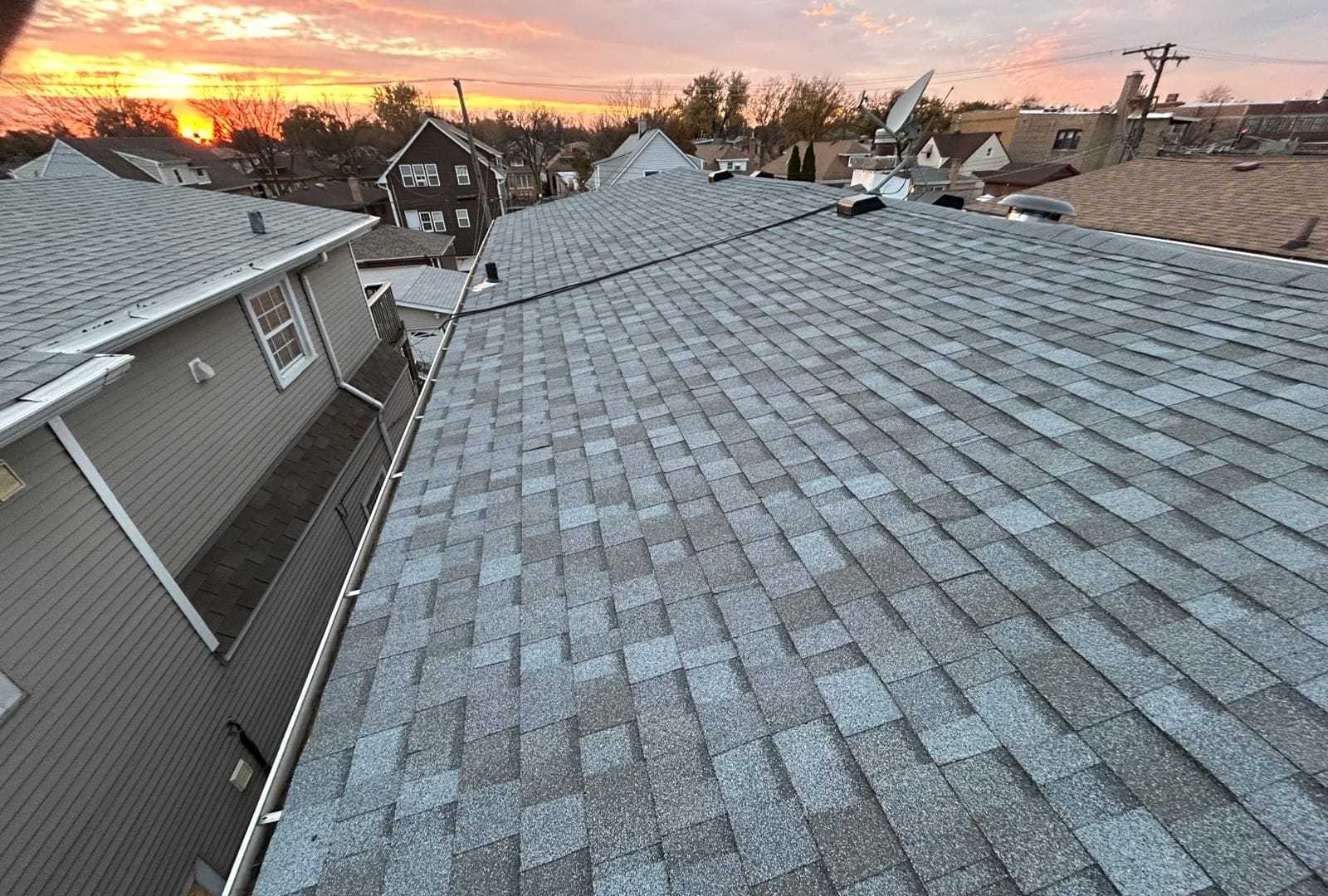
Start your project
Let’s Elevate Your Exterior.
Whether it is a new roof, siding, gutters or a repair after a storm, start with an inspection and a written estimate you can read line by line.