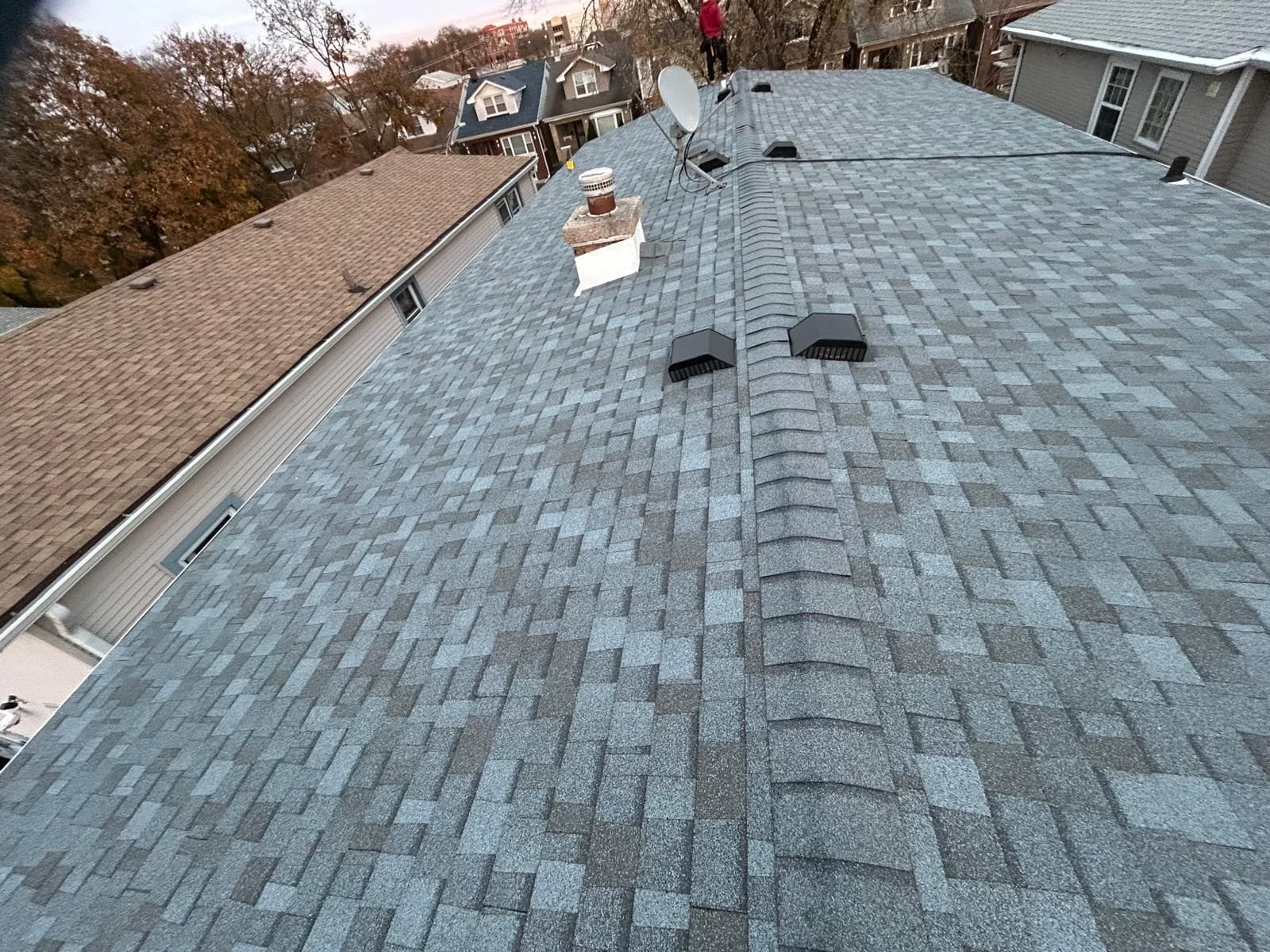
Property owners often get two or three roof estimates and find them far apart. Usually the difference is not the shingles. It is what each contractor included underneath them, how they measured, and what they assumed about the parts of the roof nobody can see until the old roof comes off.
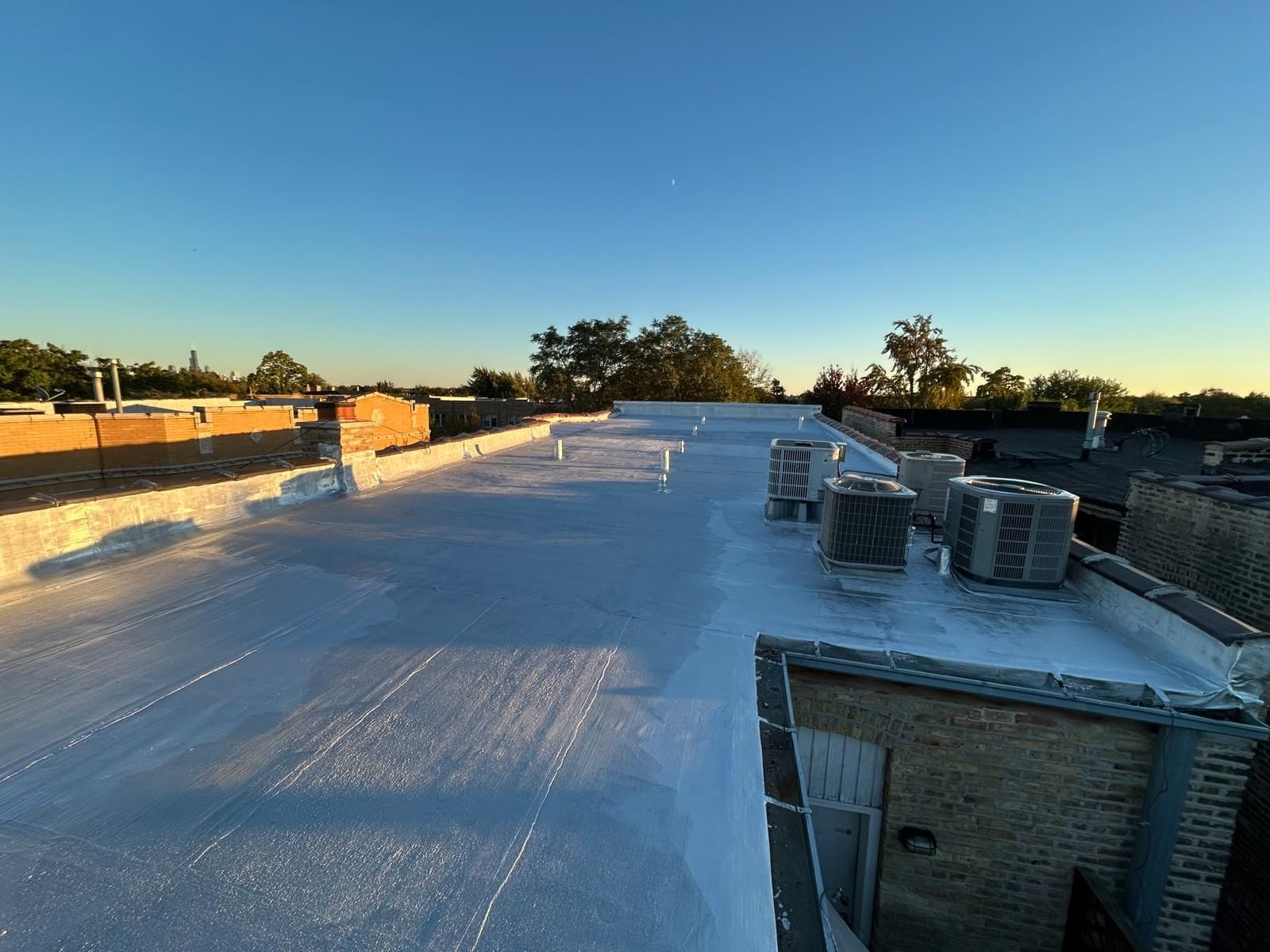
These are the factors that move the price of an asphalt shingle roof replacement on Chicago-area homes, and the questions worth asking about each one. Flat and low-slope roofs on two-flats and commercial buildings have their own cost factors, such as the membrane system, insulation and drainage work.
We do not publish price ranges here, because a number without an inspection is rarely accurate for a specific roof. The written estimate after an inspection is the reliable figure.
1. Roof size, measured in squares
Roofers price by the square: 100 square feet of roof surface. The roof surface is larger than the home's floor area, because it includes the overhangs and the slope. A clear estimate states the number of squares and how it was measured, whether by hand on the roof or from aerial measurement.
2. Pitch and complexity
Steeper roofs take longer and need more safety equipment. Dormers, valleys, skylights, chimneys and walls that meet the roof all add flashing work and cutting. Two roofs with the same number of squares can differ a lot in labor because one is a simple gable and the other is broken up by dormers and valleys.
3. How many layers come off
Older Chicago homes sometimes have two layers of shingles. Each layer adds tear-off labor and disposal weight. A full tear-off is what lets the crew inspect and repair the decking, and install new underlayment and flashing, so it is worth confirming that it is included.
4. Decking repairs
The wood deck under the shingles can only be fully assessed once the old roof is off. Good estimates say how decking repairs are handled: how damaged boards are identified, how they are priced, and that you will be shown photos before anything is added.
5. The layers you never see
This is where estimates differ most. Ask whether each of these is included, and where:
- Ice and water protection at the eaves and valleys, where ice dams and heavy runoff hit hardest in Chicago winters.
- Synthetic underlayment over the rest of the deck.
- New flashing at chimneys, walls and vents, rather than reusing old metal.
- Drip edge at the roof edges so water goes into the gutters, not behind them.
- Ventilation: balanced intake at the soffits and exhaust at or near the ridge.
A low number that leaves out flashing, ventilation or ice protection is not a cheaper version of the same roof. It is a different roof.
6. Shingle line and color
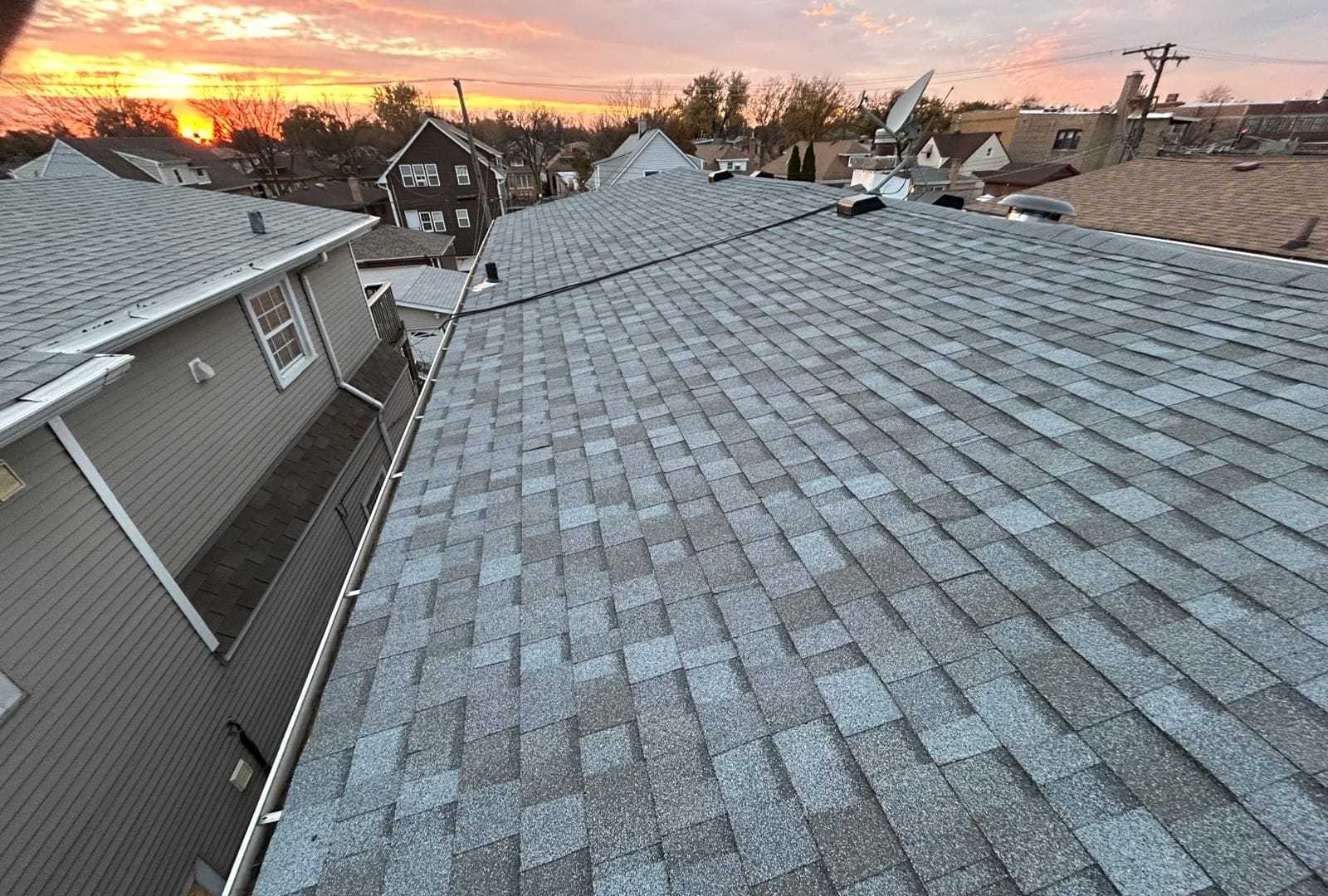
Architectural shingles are the common choice for pitched roofs in the Chicago area. Within that category, product lines differ in weight, appearance and the manufacturer warranty they carry. The estimate should name the product line, not just the color.
7. Access, permits and disposal
Tight lots, detached garages, landscaping that needs protecting and where the dumpster can sit all affect labor. Most municipalities around Chicago require a permit for a roof replacement, and permit fees vary by town. Ask who pulls the permit and whether the fee is included.
How to compare estimates
- Put the estimates side by side and check the number of squares first.
- Check that each one lists the same layers: tear-off, ice and water protection, underlayment, flashing, drip edge, ventilation.
- Ask how decking repairs are priced and approved.
- Ask who pulls the permit and what the cleanup includes.
- Ask what workmanship warranty the contractor provides, in writing.
Our estimates are written to be compared this way: every layer listed, every assumption stated, and photos of what we found on the inspection.