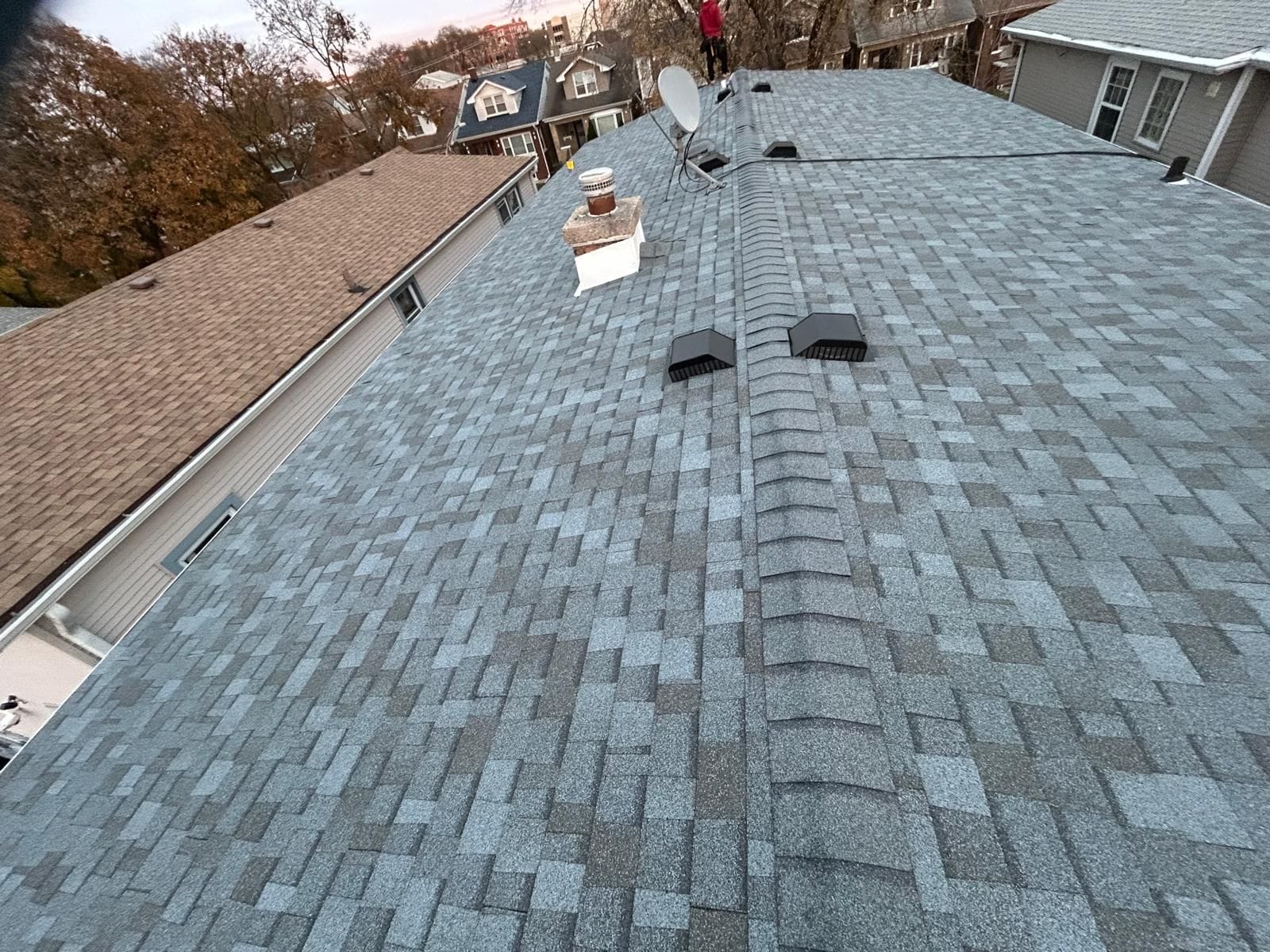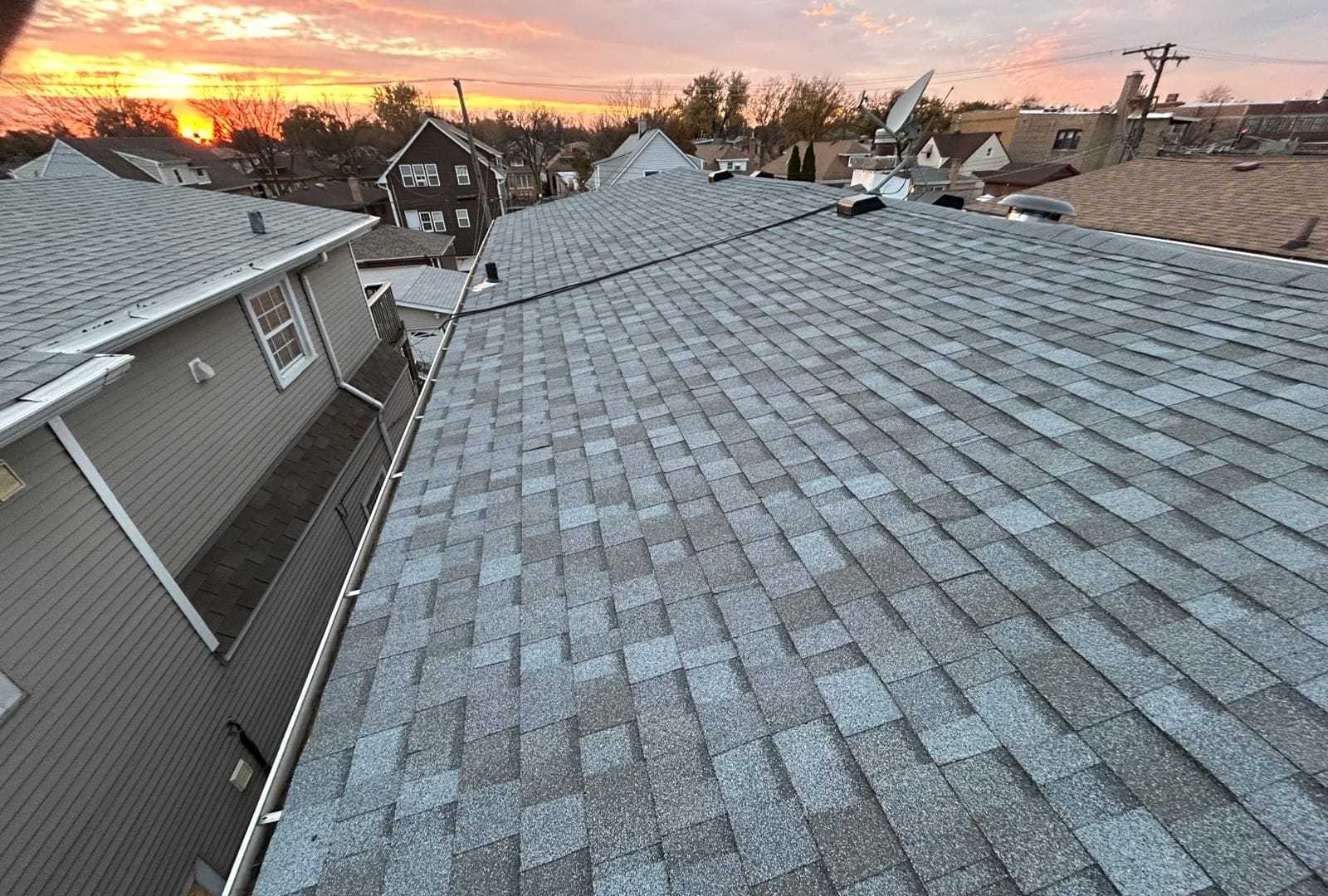

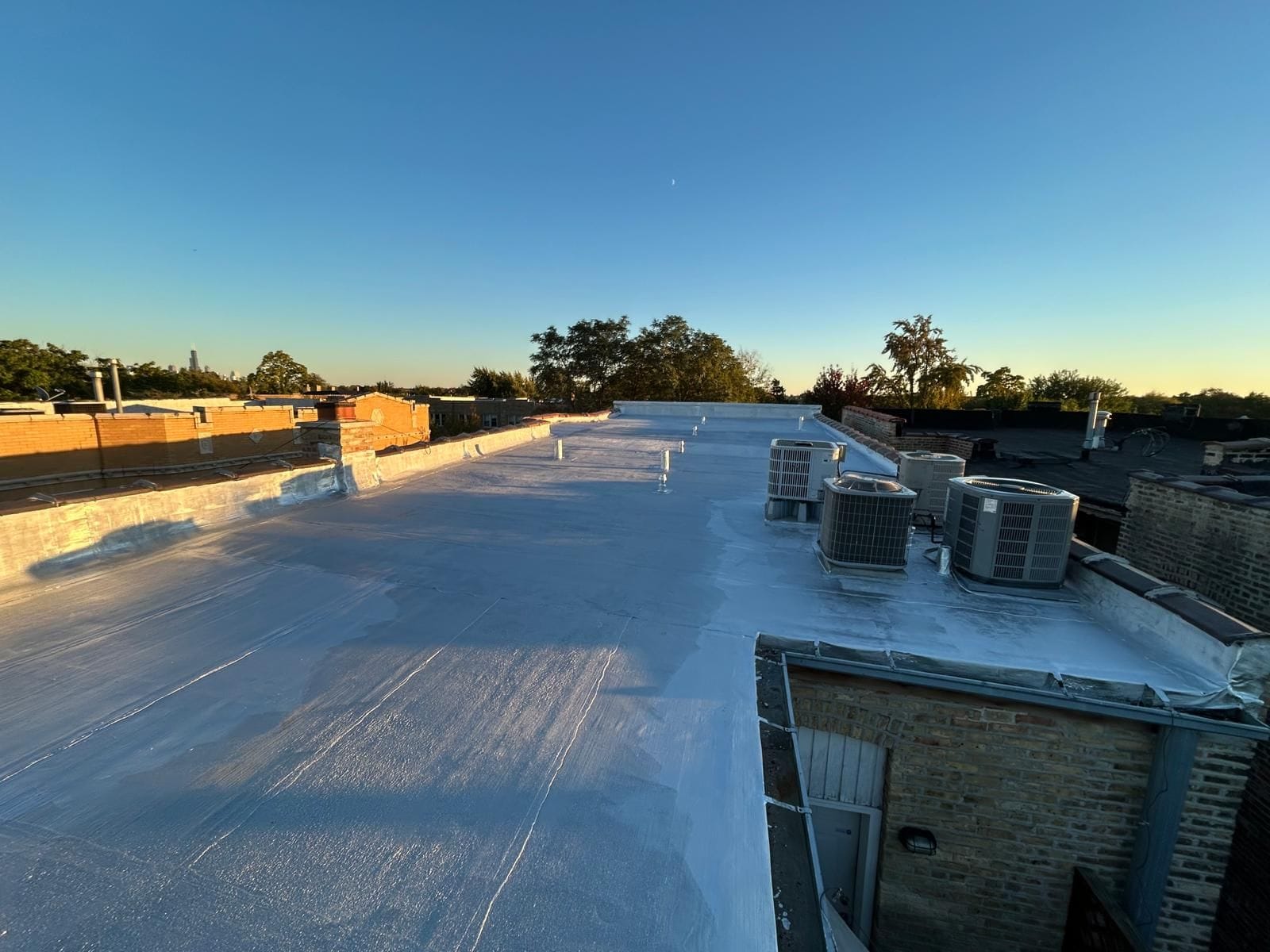
Walk any block on the north or northwest side and you will see both kinds of roof, often on the same building. Bungalows and frame houses carry pitched shingle roofs. Two-flats, three-flats, rear additions, garages and enclosed porches are often flat or low-slope. Many commercial buildings, from corner retail to small offices, have flat or low-slope roofs too. Each roof type needs a different system, and each fails in its own way.
Pitched roofs: shedding water
A pitched roof sheds water by gravity. Shingles overlap so water runs down and off, and the layers underneath catch anything that gets past them. The weak points are the places where the roof is interrupted: valleys, chimneys, walls, vents and the eaves where ice dams form in winter.
- Look for shingles that are curling, cracked or losing granules across the roof.
- Check flashing at chimneys and walls for gaps, rust or lifted edges.
- Watch the eaves in winter: thick ice at the edge can push water back under the shingles.
Flat roofs: holding a continuous membrane
A flat or low-slope roof cannot rely on overlap and gravity alone. It needs a continuous waterproof membrane and enough slope to move water to drains, scuppers or gutters. Three common systems are TPO, EPDM and torch-down modified bitumen.
TPO
A single-ply membrane whose seams are heat-welded into a continuous surface. It is common on commercial and low-slope roofs and is available in reflective, light-colored configurations. Penetrations, edges and drainage areas need proper detailing.
EPDM
A single-ply synthetic rubber membrane used on flat and low-slope roofs. It stays flexible through temperature swings. Seams, flashing, edges and penetrations need to be installed according to the system's requirements.
Torch-down modified bitumen
An asphalt-based membrane applied with heat, usually in layers. It is used on suitable flat and low-slope roofs, including many Chicago two-flats and garages. It needs an appropriate substrate, fire-safety precautions during installation, and well-made seams and flashing.
No system is always better. The right one depends on the building's design, the existing roof, slope, drainage, foot traffic and how the roof is used.
- Look for ponding: water still standing a couple of days after rain or snowmelt.
- Check seams and the flashing where the roof meets parapet walls.
- Keep drains and scuppers clear, especially in fall.
Where the two meet
The transition between a flat section and a pitched roof, or between a roof and an addition, is one of the most common leak points on Chicago buildings. It needs flashing that works with both systems. When one part of the roof is replaced, it is worth having the transition inspected at the same time.
A flat roof that ponds water will wear faster no matter which membrane is on it. Drainage comes first.
Repair or replace?
For both kinds of roof, the question is whether the problem is local or spread across the roof. A failed seam, a cracked pipe boot or loose flashing can usually be repaired. Widespread wear, repeated leaks in new places, or soft decking usually mean the system is near the end of its life. We show photos either way, and if a repair will do, we say so.